Saturday, May 21, 2011

SpEAkiNG - DescribinG PictureS


Hi, Teachers!,


I'd like to propose you all this practical oral game: "DescribinG PictureS". It's very enriching and funny for your students. You can follow these steps or change them, ok?


1st Select the pictures:
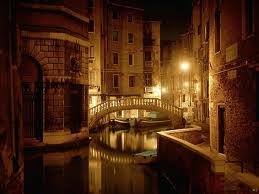
Famous paintings, such as Van Gogh's Irisis or Sunflowers, Leonardo da Vinci's Gioconda, (to help them recognise and learn some famous painters), beautiful landscapes, crowded cities, etc.

2nd Deliver pictures:
Give your students enough time to look at carefully their pictures.


3rd Questions on board:
You can ask the following questions: What can you see in your photo?, Can you recognise it?, Are there any people?, What are they doing?, Can you describe the buildings?, and so on. Obviously, questions depend on the type of pictures chosen. Then, you may need to write some questions on board.


4th Ask your pupils to describe their pictures. At the same time, you can encourage the other children / teenagers to ask some questions to their classmates.


5th Learn English and have fun!!! I hope you'll enjoy it! ;-)

Wednesday, May 18, 2011

HoW to ImProVe YouR READING


Hi, Guys!,

Sometimes, you may feel disappointed or frustrated when you have to face a text and you can't understand it clearly, or you think you've already understood it, and that's the opposite... this situation is approaching a solution...

Well, if you really want to improve your reading, bear in mind it's just practise and time, but you need to be hard-working, patient and constant. Now, if I were you, I'd look at the following link http://www.englishclub.com/reading/, there you'll find many stories plus tests, short interesting articles, ... don't waste time and start reading now!!! ;)

http://www.englishclub.com/reading/test.htm

Sunday, May 15, 2011

EuRoViSioN CoNtEsT


Hi, Guys!,

Last weekend, the Eurovision Song Contest took place in Dusseldorf (Germany). The first contest was on 24th May in 1956. It all began in 1955, the European Broadcasting Union (EBU) came up with the idea of an international song contest, where all the European countries would participate representing their nations. The competition was based upon the Festival di Sanremo, held for the first time in 1951. Through the years, many countries could incorporate to the festival, such as San Marino or Azerbaijan, the winning country this year.

Now, it is one of the most typical European tradition as well as a well-known TV show. Did you know that ABBA, Celine Dion, among other great singers, take part in this contest?

So, would you like to listen to some of these songs?

From Spain, Lucía Pérez sings "Que Me Quiten Lo Bailao".


From Switzerland, Anna Rosinelli sings "In Love For a While". In my humble opinion, this is one the best song in the contest, I can't believe it was the last coming. She's a great singer.


From Azerbaijan, the winnning song.
(I think it's a nice song, but the singers made some vocal mistakes).

Wednesday, May 11, 2011

Making SuGGeStioNS


Hi, Guys!,

Do you remember how to make suggestions in English?
Let's think about these... For example:

Why don't we go for a walk?, How about going to the theatre?

Making Suggestions

Now you can practise, just click on the following links:

http://www.tolearnenglish.com/exercises/exercise-english-2/exercise-english-13494.php

http://www.englishexercises.org/makeagame/viewgame.asp?id=3021

Who WaNtS to Be a MiLLionaiRe?


Hi, Guys!,

Would you like to take part in a contest? You may have watched this Quiz show on TV, it's really exciting and entertaining. Now, let's check your British knowledge in five minutes!

Who Wants to Be a Millionaire? PART


Click to Play!

Wednesday, May 4, 2011

INDEFINITE PRONOUNS


Hi, Guys!,


Indefinite pronouns are words which stand for an indefinite number or quantity of persons or things; but, unlike adjective pronouns, they are never used as adjectives.

Indefinite Pronouns
List : Somebody, some one, something; anybody, any one (or anyone), anything; everybody, every one (or everyone), everything; nobody, no one, nothing; somebody else, anyone else, everybody else, every one else, etc.; also aught, naught; and somewhat, what, and they.

Examples:
Everybody is coming to my party.

There's nothing in the fridge.

But do you know when you have to use nothing or anything? Well, click on the following link which is really interesting.
http://www.englishforeveryone.org/PDFs/Indefinite%20Pronouns.pdf

http://ebookbrowse.com/unit-1-grammar-exercises-indefinite-pronouns-9ab-pdf-d93796829


Indefinite Pronouns

Countable and Uncountable Nouns


Hi, Guys!,

What's your problem about Countable vs. Uncountable Nouns in English? They can be easy to learn... Let's start!

Countable Nouns are things we can count. They can singular (ex. a cat, one ball, this girl) or plural nouns (ex. some cats, two balls, these girls).

Uncountable Nouns are things we can't count, they are substances, concepts or elements which we can't separate. For example: money, milk, art. They can't be plural, so these nouns are invariable. We use them as singular nouns, for example: We must say "There is no milk", "There was too much money on the floor".
This is a brief summary of Count. vs. Uncount. Nouns, but you may need extra explanation as well as exercises. So now, look at the following practical worksheets.

Countable and Uncountable nouns exercises

Countable and Uncountable Nouns

ejercicios unidad 3